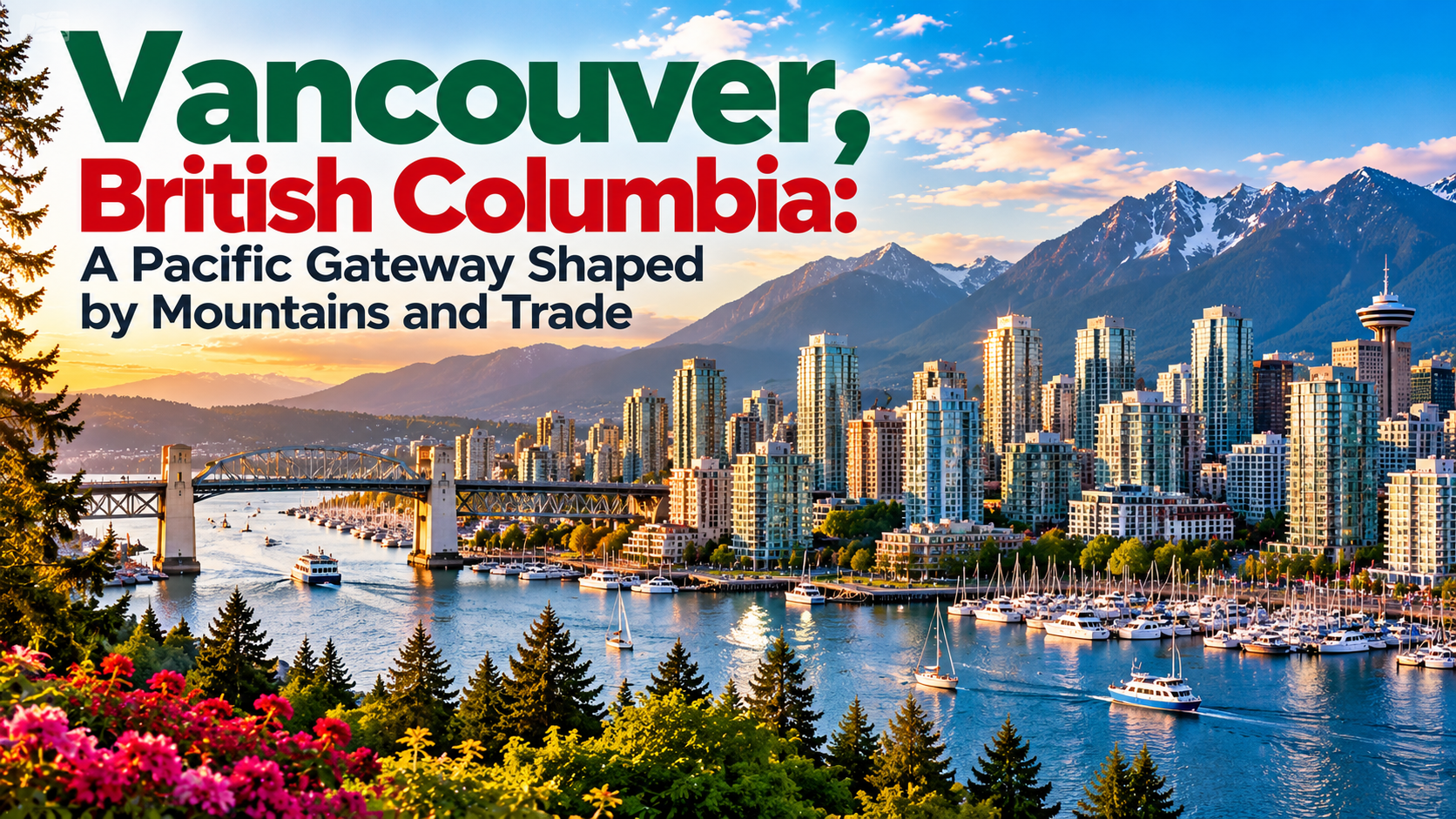
Vancouver sits between the Pacific Ocean and the Coast Mountains, a setting that shapes its landscape, transportation and economy. The city is on the traditional territories of the Musqueam, Squamish and Tsleil-Waututh peoples, whose connections to the area long predate its modern municipal boundaries.
How Vancouver developed
The city was incorporated in 1886, the same year the Great Vancouver Fire destroyed much of the young settlement. Rail connections, port activity and immigration helped Vancouver grow into a major Canadian metropolitan centre. Its story includes both economic opportunity and difficult histories of exclusion and displacement.
A regional and international economy
Port-related trade, film and television production, technology, tourism, education and professional services contribute to Vancouver’s economy. The port connects Canadian businesses with international markets, while the city’s neighbourhoods support restaurants, trades, shops and many smaller service providers.
Connections beyond the city
Vancouver is closely linked to Burnaby, Richmond, North Vancouver, Surrey and other Metro Vancouver communities. Residents cross municipal boundaries for work, school, shopping and recreation. That regional network matters as much as the downtown skyline when understanding how the area functions.
Culture and everyday exploration
Waterfront paths, public markets, parks, museums and neighbourhood business districts offer different ways to experience Vancouver. Weather and seasonal demand can change travel plans, so visitors should confirm current hours and transit information.
Discover local Vancouver businesses
MOMO Magazines explores the people and places behind Canadian cities. For practical local discovery, visit MOMO Top 10 and search for Vancouver services that meet your needs. Check current business details directly before making arrangements.