
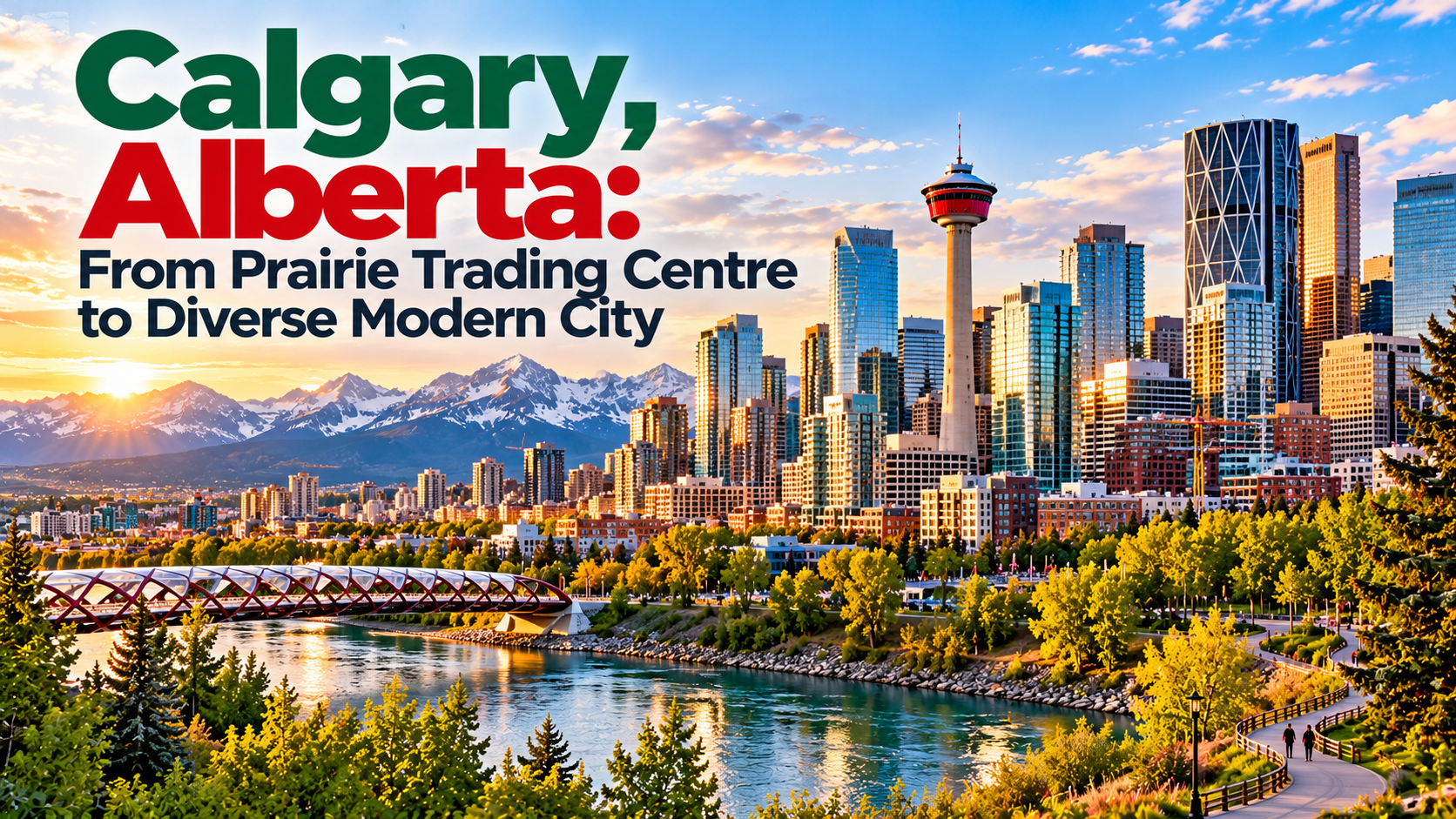
Calgary stands where the Bow and Elbow rivers meet, east of the Rocky Mountains. Its geography has shaped transportation, settlement and outdoor life. The area is part of the traditional territories of Indigenous peoples, including the Blackfoot Confederacy, the Tsuut’ina Nation and the Stoney Nakoda Nations, and is also home to Métis communities.
Historical foundations
Fort Calgary was established by the North-West Mounted Police in 1875. The arrival of the Canadian Pacific Railway accelerated growth, and Calgary was incorporated as a city in 1894. Agriculture, ranching and later energy development each played important roles in the city’s expansion.
More than one industry
Calgary remains an important centre for energy businesses, but its economy also includes finance, logistics, technology, education, construction, hospitality and professional services. Independent businesses help serve neighbourhoods across a geographically large city.
Its neighbours and connections
Calgary has strong relationships with Airdrie, Chestermere, Cochrane and Okotoks. People travel between these communities for jobs, services and recreation. The city also acts as a gateway for visitors heading west toward the Rocky Mountains, although mountain destinations have their own communities and local economies.
What gives Calgary character
The Calgary Stampede is one well-known part of the city’s identity, but local arts venues, river pathways, public libraries and diverse food communities offer year-round perspectives. Exploring individual neighbourhoods can reveal more than a single festival or landmark.
Find what you need locally
MOMO Magazines documents Canadian cities through their histories and everyday life. To explore local businesses and compare services in Calgary, use MOMO Top 10. Verify qualifications, service areas and hours with the business before booking.