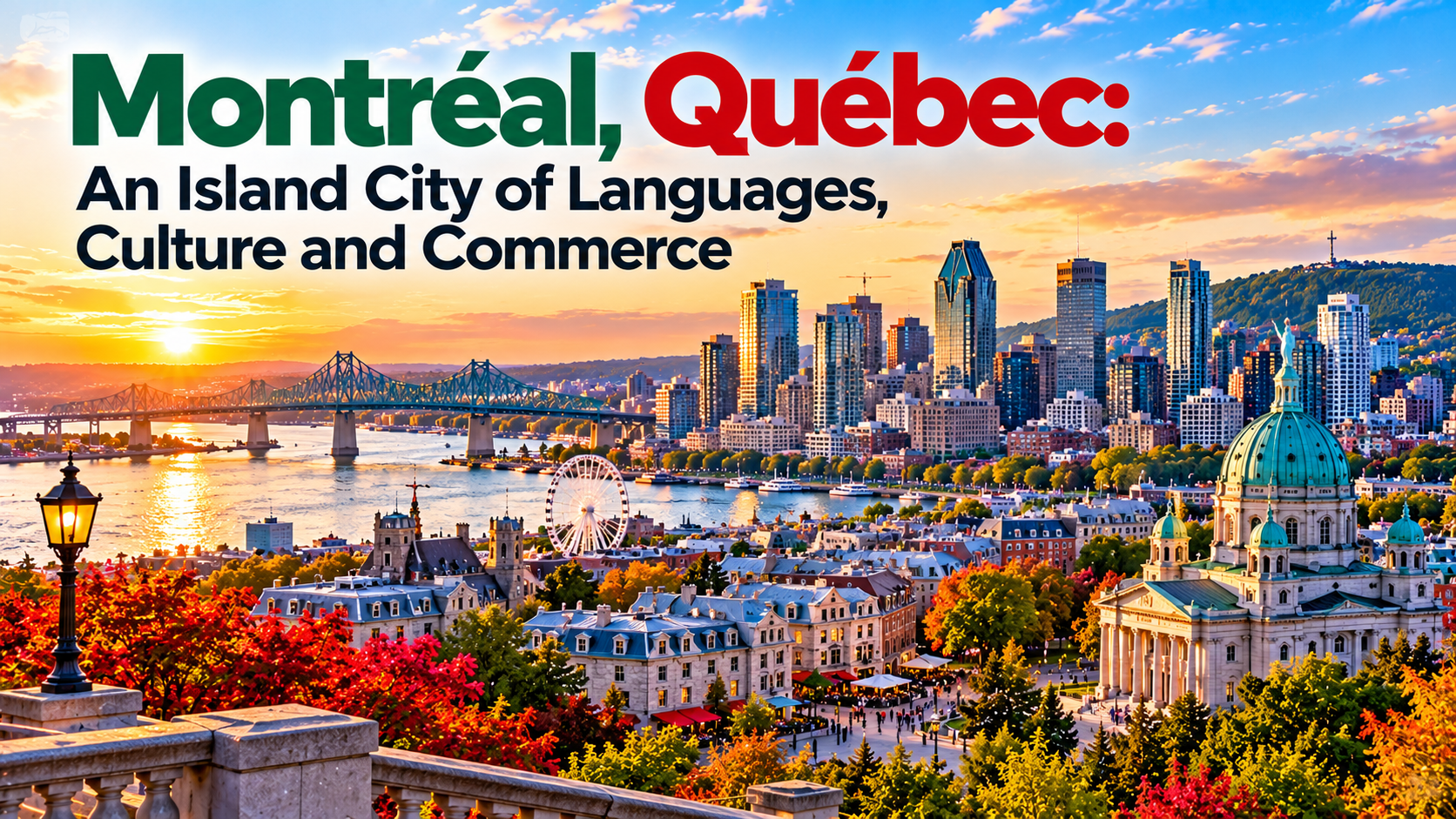
Montréal occupies an island in the St. Lawrence River and has long been a meeting place for people, trade and ideas. The island has a deep Indigenous history, and the city today is known for its French-language character, multilingual communities and distinctive neighbourhoods.
Origins and historical growth
The French colonial settlement of Ville-Marie was founded in 1642. Over time, Montréal became a major commercial and industrial centre, with the river, canal and railway systems helping connect it to other regions. The city’s heritage also reflects migration, political change and the contributions of many cultural communities.
An economy with many strengths
Education, aerospace, life sciences, technology, creative industries, tourism, transportation and professional services all contribute to the metropolitan economy. Small businesses, from neighbourhood cafés to specialist contractors, play an important role in how residents experience the city.
Connected to a wider region
Montréal’s daily life extends across bridges and transit links to Laval, Longueuil and other communities in the metropolitan area. These relationships affect commuting, shopping, cultural events and business activity. Understanding Montréal means looking beyond the historic centre to the wider network of boroughs and neighbouring municipalities.
Exploring the city thoughtfully
Markets, parks, museums and neighbourhood streets offer opportunities to discover Montréal at different speeds. Visitors should consider language preferences, seasonal conditions and public transit options when planning outings.
Local discovery with MOMO
MOMO Magazines shares informative stories about Canadian places. When you need a restaurant, service provider or local shop, explore MOMO Top 10 and search for Montréal. Always confirm availability and business information directly.